
Introduction
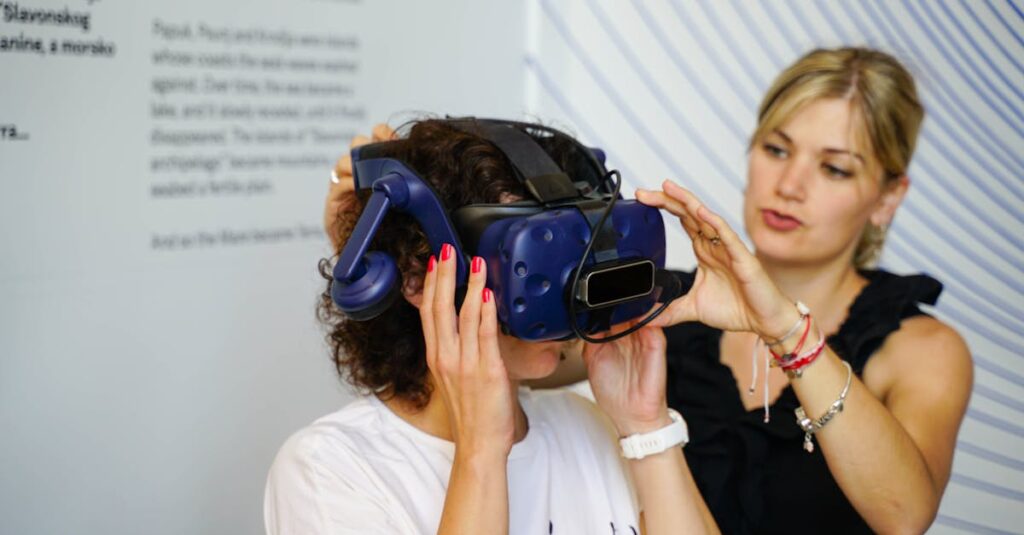
Imagine a classroom where students can walk on the moon, dive deep into the ocean, or travel back in time to witness historical events firsthand, all from the comfort of their desks. It may sound like something out of a sci-fi movie, but thanks to virtual reality (VR), this kind of learning is becoming a reality. VR is quickly transforming the way we approach education, offering a dynamic and engaging method to help students understand complex subjects. But how can educators effectively use VR in the classroom? Let’s explore how virtual reality is changing the face of learning and how teachers can make the most of this technology.
The Power of Immersive Learning
When you think about traditional education, it’s often all about textbooks, lectures, and exams. But what if learning could be more like an experience rather than a chore? That’s where immersive learning comes in. VR creates environments that simulate real-world or imaginary experiences, allowing students to interact with the content in a hands-on way. In contrast to reading about ancient Egypt, students can explore the pyramids, see the hieroglyphs up close, and learn about the culture as though they were living in it.
1. Engaging Visual and Sensory Experience
The most obvious benefit of VR is how it transforms visual and sensory engagement. Instead of reading or hearing about a concept, students are placed directly inside it. For example, in a biology class, students could explore the human body in 3D, moving inside the circulatory system to see how blood flows through veins and arteries. It’s much more engaging than simply reading about the heart’s functions in a textbook.
Consider a high school history class where students can witness the fall of the Berlin Wall or walk through ancient Roman marketplaces. These kinds of VR lessons don’t just make the subject matter more interesting, they also help students retain information better. Research shows that immersive learning experiences like these can significantly improve memory recall and understanding, as students are actively involved in the lesson, rather than passively receiving information.
2. Hands-On Learning in a Virtual World
One of the most exciting aspects of VR in education is the potential for hands-on learning without the risks or costs of real-world experiments. For instance, students learning physics can virtually build and test machines, conduct chemical reactions, or simulate engineering projects in a safe, controlled environment. Imagine a group of students experimenting with forces, gravity, or pressure in a virtual lab where no equipment is at risk of being damaged, and the possibilities are endless.
This is especially valuable for subjects like chemistry, where some experiments may be too dangerous or too expensive to conduct in a regular classroom. With VR, students can explore molecular structures, experiment with reactions, and even create their own lab experiments, all while staying safe. It’s like giving them a science lab with unlimited possibilities, minus the cleanup!
3. Encouraging Empathy and Global Awareness
Another fascinating use of VR in education is its ability to foster empathy. By putting students in the shoes of others, VR can help them experience situations from different perspectives. For example, students can virtually walk through refugee camps to understand the struggles faced by displaced people or experience the daily life of someone in a different culture. These VR experiences can help young learners develop compassion and empathy, which is a crucial skill in today’s interconnected world.
In social studies, this approach can encourage students to think critically about global issues such as poverty, climate change, and inequality. By seeing and interacting with simulations of these real-world challenges, they gain a deeper understanding of the complexities involved. It’s not just about memorizing facts; it’s about fostering awareness and empathy that can help shape socially responsible individuals.
Practical Ways to Integrate VR in Education
While VR technology sounds futuristic, it’s becoming more accessible to schools every year. Here are some practical ways that teachers can incorporate virtual reality into their lessons:
- Virtual Field Trips: Take students on field trips without leaving the classroom. Whether it’s the Louvre in Paris or the surface of Mars, VR can bring the world to them.
- Interactive Simulations: Use VR to simulate scientific experiments, architectural designs, or even complex mathematical concepts.
- Collaborative Learning: Virtual reality isn’t just for solo experiences. Some VR platforms allow multiple students to interact in the same virtual space, which is great for group projects or collaborative learning activities.
- Historical Reenactments: Instead of reading about historical events, students can witness them in VR. Imagine learning about World War II by virtually standing at Normandy or watching a reenactment of the signing of the Declaration of Independence.
VR Tools and Platforms for the Classroom
Several platforms and tools are available to make it easier for teachers to integrate VR into their curriculum. Some popular options include:
- Google Expeditions: This app allows teachers to take their students on virtual field trips to locations all over the world, from the Great Barrier Reef to the Great Wall of China.
- Nearpod VR: Nearpod combines VR with interactive lessons, giving teachers the ability to create immersive content that students can explore as part of the lesson plan.
- Oculus for Education: Oculus has a suite of VR experiences tailored specifically for the education sector, offering interactive lessons in subjects like math, history, and science.
- ClassVR: This platform is designed for K-12 students and allows for customizable VR content, making it ideal for teachers looking for flexibility in their lessons.
These tools make it easier for educators to bring virtual reality into their classrooms without the need for complex setups or technical expertise. With these platforms, it’s all about making learning fun and engaging.
Challenges and Considerations
As with any new technology, there are a few challenges to consider before fully integrating VR into the classroom. One issue is cost: while VR technology has become more affordable, it’s still an investment. Some schools may struggle to provide enough devices or the necessary infrastructure to support VR learning for all students. Additionally, there is the question of accessibility, students with disabilities may face barriers to using VR, which requires thoughtful planning and accommodations.
Another concern is the potential for distraction. If not carefully monitored, VR experiences could lead to students becoming more focused on the technology than the actual learning content. Teachers will need to strike a balance between allowing students to explore and ensuring that they stay on task.
Conclusion: The Future of Learning is Immersive
Virtual reality is a game-changer for education. By offering students the chance to engage with subjects in a way that feels real, immersive, and interactive, VR is helping to create a more dynamic, engaging learning experience. From virtual field trips to hands-on science experiments, the possibilities are endless. The future of education is immersive, and VR is leading the way.
As VR technology continues to improve, we can expect even more innovative uses in the classroom. For now, it’s clear that VR isn’t just a gimmick, it’s an educational tool that’s here to stay. Educators who embrace this technology today are preparing their students for a future where learning is more interactive, engaging, and, ultimately, effective.